Showing posts with label Christianity. Show all posts

Sunday, 22 January 2012

The Evolution of Religion

Over the history of mankind there have been many different religions. Just from memory Europe has had the Norse mythology, Greek/Roman Pantheons, Druidic paganism and several different forms of Christianity, the Americas had their own pantheon based nature-worship in various forms, north Asia tended towards some sorts of ancestor-worship, south Asia leaned more to the philisophical Buddhism and Sikhism, along with Hinduism, Africa has a lot of tribal-based gods, and a long history of pantheons in Egypt and the contemporaneous societies.

This list is just what I am aware of, and there are certainly many more about which I am ignorant, to my loss. Why am I ignorant of them though? Undoubtedly there are some religions of which no remnants have survived, their beliefs and rituals completely lost to the past, others will have been subsumed and aggressively curtailed by other, more successful faiths, and yet more still will eke out a survival with a small but dedicated following, isolated from other people.

Religions evolve over time, they spawn sister species which become competitors and, just like with biological evolution, sometimes they out-evolve others leading to inevitable extinctions. In modern times this isn't always such a bad thing, the big religions adapt to the changing times - far more Christian churches, for example, are tolerant of women's rights than there were at the beginning of the 20th century. In ancient times, however, it may not have been such a boon.

One of the earliest comments on Darwin's theory of evolution by natural selection was made by Herbert Spencer, a polymath scientist, and Darwin actually incorporated the comment into the fifth edition of his book On the Origin of Species... It was 'survival of the fittest,' long since one of the most misunderstood terms in biology, after evolution itself. Spencer and Darwin used the term not to imply the physically fit, the most intelligent, the fleetest of foot, but the individual most fit to the environment in which it lived.

Religions have long been subject to this concept and older religions have tended to be forced to the outskirts of society by ones which appear more suited to the environment. Unlike biological evolution though, religions had a hand in shaping the environment. When the Emperor Constantine converted to Christianity and later Emperors of Rome eventually outlawed other religions Christianity had created an arena where it was the fittest to survive, because following other religions would lead to great sanctions.

I don't have as strong a knowledge of how it happened elsewhere around the world, but I would imagine that Hinduism in India underwent a similar power struggle with other local religions in its early days, as well as Islam in the Middle East. Because it is the survival of the fittest, not the survival of the nicest. A certain aggression and violence is inherently part of religions' history, as it is a large part of the way a religion will get a significant following in darker times.

In modern times there are two major routes that a church can take; they can either move with the times or they can stubbornly stick to their old methods and refuse to budge. Middle Eastern Islam and Roman Catholicism are two different examples of this second group, both stubbornly clinging to an old way of doing things; in one case in a moderate way, in the other a medieval attitude.

All of the dominant religions have had to trample across hundreds of smaller traditions on the way. Now that they're up against a group who are proving that they can push back effectively they are beginning to panic.

Here endeth the rant...

As an unrelated aside:
Congratulations to Jessica Ahlquist. We're all evil little things with you!

Sunday, 15 January 2012

God, Satan and The Garden of Eden

GEN 3:11And he said, Who told thee that thou wast naked? Hast thou eaten of the tree, whereof I commanded thee that thou shouldest not eat?
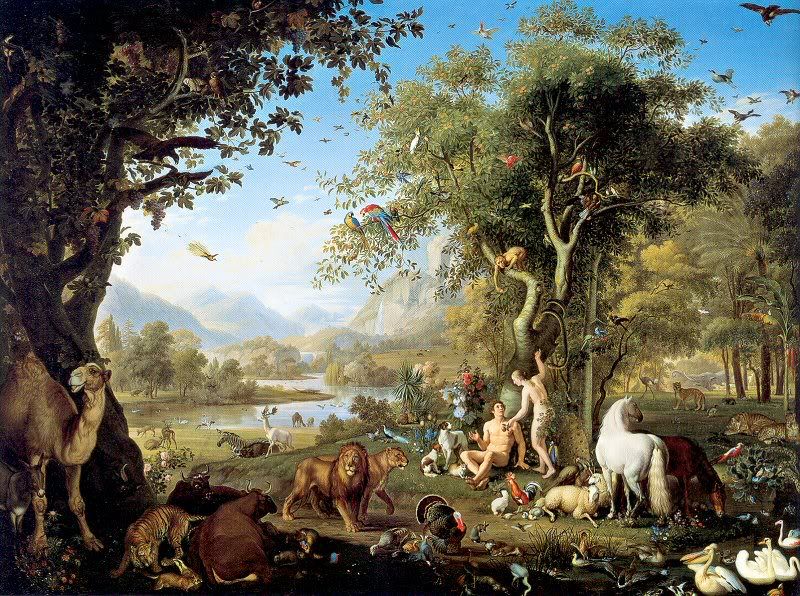
Everyone in the western world should be familiar with the story of the Garden of Eden, at least at its most basic. Most Christians I know take it as an allegory, not an historical fact, I have been lucky enough to have met very few creationists in my life.

The story is supposed to represent the loss of humankind's 'innocence,' after Eve was tempted by the evil serpent. In some versions I have heard that the serpent was secretly the devil in disguise, but I couldn't find that in my quick Bible refresher I did before beginning this blog.

My question for this rant is 'who is the good character in this story?'

On the one hand we have the god, YHWH, supposedly the creator and father figure of the human race and on the other, we have the 'great adversary,' Satan the deceiver. God has created Adam and Eve who are effectively children in this story, having no real knowledge nor comprehension of right and wrong, and put them in a beautiful garden where they want for nothing on the condition that they don't eat the fruit of the tree of the knowledge of good and evil, under the threat of death.
Satan, or the serpent, then comes along and persuades the woman and through her the man to eat from this tree. For this God casts them out of the paradise and piles upon them massive punishment.

That's the story, now who comes across in the best light.

Point One
On the face of it Adam and Eve disobeyed their creator's instruction and were punished. But that is only a just outcome if you accept that Adam and Eve owe their unquestioning obedience to God. The most common response to that claim that I have heard is that, as their creator, God has the right to require obedience of them. This theme gets repeated later on in the Bible, in Exodus, when absolute obedience to parents on implicit pain of death is a commandment.

God keeps them in the garden and restricts them from gaining knowledge and consequently the freedom to choose for themselves what should be their fate. A father keeping his children locked in his metaphorical cellar? That's right, God is basically a better-funded Joseph Fritzl. It's not a perfect analogy, but it fits well enough; it even has incest.

Point Two
In this story Adam and Eve have no knowledge of good and evil. They are basically children, entirely dependent on God, and at his mercy. God has the option of teaching them, but elects not to, preferring them unlearned and servile.
Not knowing what is good and evil, how on earth could Eve know that disobeying God is something that she shouldn't do? She has been told not to do it, but she doesn't have any understanding of morality, so when Satan tells her that the tree won't kill her (does she even know what death is?) she has no reason not to eat the fruit.

Point Three
Satan comes into this story to persuade Eve to eat the fruit of the tree. The traditional reading is that he is trying to tempt the fledgling humans away from God and into sin, leading to what some Christians refer to as 'The Fall of Mankind."
An alternative reading of the story, taking into account the first two points, is that Satan saw the two prisoners kept in the garden in their ignorance and took pity on them. He took it upon himself to teach them. When God found out he over-reacted to an obscene degree.


Now this comes across as a metaphor for growing up, with Adam and Eve being children until they were tempted and grew up with new knowledge, losing their 'innocence,' or leaving the home where their parents provide everything for them and having to make their own way in the world.
What is this innocence? Why does knowing about good and evil make them somehow guilty?

Satan strikes me as the noble character, trying to help the young children understand the world around them. God seems like an overbearing control freak, who throws a tantrum when his children don't do exactly what he says, just because he said it.


Either way, they're both fictitious characters!


Here endeth the rant...

Further interest on this topic would be Philip Pullman's His Dark Materials trilogy and Andre, a vlogger from YouTube, recently did a video along the same lines as this.

Sunday, 1 January 2012

Opinions Are Not Sacred

Have you ever been in a debate with someone, it could be about anything at all, to have them say "Well, that's my opinion!" as if it trumped anything you could possibly say in response?

This is something that really frustrates me because, while I agree that everyone is entitled to hold their own opinion, that opinion is not sacrosanct. Having an opinion does not give you the right to completely ignore any debate against it, nor does it give you the right to stifle those who disagree with you.

Some people are of the opinion that black people are inherently inferior to white people, others argue that homosexuality is a choice, in the face of all research on the topic. Some people even go as far as to claim that Marmite is not delicious!

Should these opinions go without criticism?

Most people would say "Of course not," (except for the Marmite one, which is intended purely as a joke). But this is what the people who attempt to derail arguments and debates with "Everyone's entitled to their opinion" do; they open up the field for people holding these opinions to quash criticism before they receive it. There are opinions which discriminate against and, in extreme cases, are harmful to others.

In case you question how an opinion can be harmful, here is a real example:
Over the last year a number of gay teenagers across the U.S. committed suicide in a great tragedy. How many of them feared the opinions of those close to them? They genuinely thought they had no other options and so took the desperate step of ending their own lives.

It is incredibly similar to the Christian privilege in both the U.S. and Britain, which ends up with the Churches complaining of prejudice whenever they are criticised. In a society where they are not used to having anything bad said about them then anything said which isn't positive is decried as unfair.

This is not the case. It is fair to criticise opinions, especially the discriminatory ones. Everyone's opinions should be held up to scrutiny, reconsidered and re-evaluated based on the best available evidence. Unsurprisingly then the best outlook that presents itself is scepticism. Be sceptical about everything you believe and allow evidence to alter your opinions if you are presented with something which contradicts your previous position.  You may not even know that you are discriminating against someone with what you say and do, but as soon as you are made aware of it you should take your steps to change.


Then again, that's just my opinion...

Here endeth the rant...

Wednesday, 21 December 2011

No More Christ in Christmas

A regular part of Christmas for someone involved in or observing the worldwide secular movement is the inevitable accusations of a "war on Christmas" and the Merry Christmas/Happy Holidays debate that rages in the United States.


In brief: some members of American churches object when people in stores wish them "Happy holidays" instead of "Merry Christmas," or if a government post says this instead. Keep Christ in Christmas is the rallying call.

The secularist response varies, but is usually along the lines of "Specifically saying Christmas excludes non-Christians" Here are a few posts about the so-called "war on Christmas" over at Hemant Mehta's Friendly Atheist Blog


Now this brings me to the main topic of today's rant. In Britain this whole debate is much more muted. Most of the people I've spoken to find the American season's greeting "Happy Holidays" somewhat mawkish and saccharine. In Britain almost everyone will say "Merry Christmas."

As I said in the preamble, this tends to be frowned upon by American secularists as it excludes not only atheists and agnostics but also Jewish people, Muslims, Hindus... in fact anyone who is not a Christian. It doesn't seem like an identical situation in Britain.

I would argue that, to a certain extent, Christmas in Britain has become a secularised festival, the newest incarnation of the Solstice celebrations. Anyone who has a basic understanding of the history of Christmas knows that it began long before Christianity was founded. The midwinter rituals of inviting the sun back now that it's got too cold consistently regenerate into new forms. Christmas is now a cultural festival of family, friends, good food, booze and in Britain, not an exclusively Christian affair. It can be enjoyed by everyone who wants to.

In Britain, Christ is no longer the focus of Christmas. I'm coming to the conclusion that the word has shifted enough that it now belongs to everyone instead of just the members of faith.

At least for the rationalists among us there is no more Christ in Christmas.


That's the end of the main body of the rant. I have some less coherent musings below...

Regarding the Happy Holiday/Merry Christmas distinction, I have a theory as to why our two countries use the different terms.

In Britain the word Holiday seems to be much more frequently used. While U.S. schools have Spring and Summer breaks, we have Easter and Summer holidays. From the little I see of American Culture (via Films, TV and a little interaction with my Yankee (A term of affection) family) 'holiday' specifically seems to refer to the winter school break and the associated festivals.
This could probably be tied to the fact that the U.S. has the Establishment Clause, while Britain is legally a Christian country... I'd love other opinions...

And:

Merry Christmas

Saturday, 17 December 2011

Damn Your Christian Values, Mr. Cameron

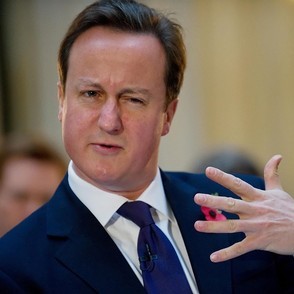
So, this week our 'Glorious Leader' David Cameron made some rather bold statements (quoted here in the Telegraph and the Guardian) about the role of church and Christianity's place in our country. Interestingly he claimed that "the church must shape our values," and that "Christian values were central to Britain and they should be 'treasured'"

Oh, really? Which exclusively Christian values is he referring to?

The big things, like prohibitions against those who murder, lie, and steal had to have evolved before the Judeo-Christian myth was written, they are required for society to form; how could a society of individuals successfully interact with each other in a dangerous environment, as our ancient ancestors did, without being able to trust one another not to turn on each other?

Every society on Earth (and even some groups of animals) has adopted the same basic morality, independently of the twelve tribes of Israel. The nuances then grow as cultures and religions develop but morality came before religion, not the other way around.

The culture of Europe - and consequently Britain - had the teachings of the Catholic Church for the best part of eleven hundred years, from when Emperor Constantine converted the Roman Empire to Christianity to when Henry VIII broke away from the Catholic Church and Martin Luther pinned his note to the door.

During this time (most commonly known as 'The Dark Ages') the Bible was heavily influential in the politics of the European world. Biblical rulings like the right to own slaves, wives and daughters were property to be bartered for control of greater interests in business or politics and the persecution of those different from the norm, as dictated by the Holy Orders. These are Christian Values, just as much as Love Thy Neighbour as Thyself and Turning the Other Cheek. Atheists are often accused of cherry-picking from the Bible to make it look bad; Christians do exactly the same in the opposite direction. Jesus himself advocated hating family in Luke 14:26 and it's amazing how rarely that particular value isn't lauded by the Politicos.

Modern values actually have little to do with a Christian background and owe more to the Enlightenment; the Age of Reason. As reason became more frequently used as a tool for discovery things began to change into what we would consider modern morality. The fact that the Enlightenment happened in Europe is not a greatly significant notifier, it could have happened anywhere; it almost happened earlier in the Islamic countries of the Middle East, but was quelled by a sudden uprising of religious fundamentalism. Almost ironically, this sudden burst of insularity from the Muslim nations allowed the European Enlightenment to begin when the libraries left behind by the Islamic rulers of Spain were discovered.

Whenever the values were altered: freedom of slaves, equality of women, equality of different races and currently equality of different sexualities are the most notable, the churches were always a little late and often fought against the changes for several years until they bowed to the Zeitgeist. We can observe this happening today with the Christian opposition to gay rights, which mainly cites Leviticus. Just quickly contrast Leviticus 18:22, which is the most common argument against gay marriage and rights, with Leviticus 11. You never get many Christians adamantly insisting that Pork and Shellfish shouldn't be eaten, do you?

Cameron also claimed that the Bible supported the emancipation of women. Has he never read First Timothy Chapter 2? Here are some choice quotes:
11Let the woman learn in silence with all subjection.

12But I suffer not a woman to teach, nor to usurp authority over the man, but to be in silence.

15Notwithstanding she shall be saved in childbearing...

So emancipation of women is basically an inferior position to men in all things, keep quiet bitch and get pregnant if you want a chance of seeing heaven. You can cherry-pick the Bible to tell whatever story you want, but it really invalidates the claim that it is a book of truth if you have to ignore specific parts of it to justify your point of view.


I could go on and on, but too much Bible bores most people, and most Christians even more so. The simple fact is that the values that Cameron is putting such an emphasis on are largely innate to all cultures or developed from the resistance to Christian rule. The only fair way to run a society is secular, religion has no place in politics. It's bad enough that we have a dozen bishops in the House of Lords for no reason other than that they are bishops in the Church of England.


Damn your Christian Values, Mr. Cameron. They are ancient, obsolete and unnecessary.


All Bible quotes are from the King James Version, which is to what Cameron referred.